Workers Compensation Insurance Quote

Workers Compensation Insurance Quote
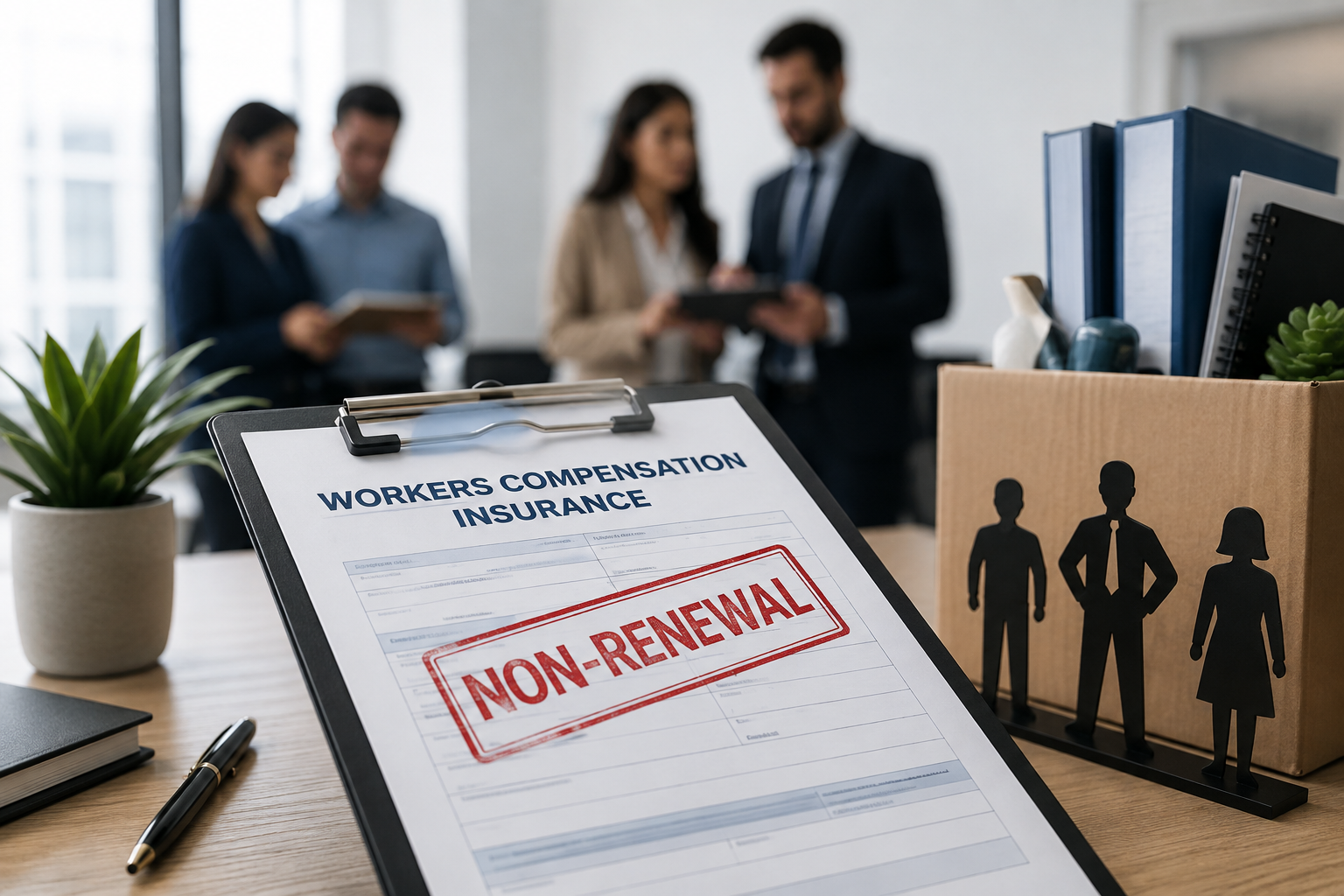
Receiving a workers compensation insurance non-renewal for staffing agencies can create immediate challenges. Without active workers' compensation coverage, staffing agencies may struggle to meet state requirements, fulfill client contracts, or continue placing employees. Because staffing firms often hire temporary workers for multiple industries, insurers generally consider them a higher-risk business than many other employers.
If your carrier has issued a workers compensation policy non-renewal, understanding the reason behind the decision is the first step toward finding replacement coverage and preventing future issues. This guide explains why non-renewals happen, what actions to take, and how staffing agencies can improve their chances of securing affordable coverage again.
A workers' compensation policy non-renewal means your insurance company has decided not to continue your policy after its current term expires. Unlike a cancellation, which ends coverage before the policy's expiration date, a non-renewal allows coverage to remain active until the scheduled expiration.
Most insurance companies provide a **workers comp non-renewal notice** several weeks before the policy ends, although the exact timing depends on state regulations. For staffing agencies, this matters because workers' compensation insurance is generally required by law. Without coverage, agencies may be unable to place employees, sign contracts with clients, or remain compliant with state regulations.
Staffing agencies place employees across different industries, job sites, and risk levels. This unique business model often increases the likelihood of claims and makes underwriting more complex.
Several factors commonly contribute to staffing agency workers compensation insurance non-renewals. Staffing agencies depend on workers compensation insurance to protect employees and meet state laws. A non-renewal notice can create serious problems if you do not act quickly. Many insurance companies decide not to renew a policy for different reasons.
Multiple workplace injuries occurring within a short period
Large or catastrophic workers' compensation claims
Misclassified employees resulting in inaccurate premium calculations
Late premium payments or outstanding balances
Fraud concerns or inaccurate reporting
OSHA violations or poor workplace safety records
Rapid business growth without updated payroll estimates
Weak safety programs and inadequate employee training
Many staffing agencies receive warning signs before a formal non-renewal notice arrives. Insurance companies evaluate overall risk rather than one single factor. Addressing these issues early can improve future renewal opportunities. Recognizing these signs gives agency owners time to improve operations before renewal decisions are finalized. Some common indicators include:
A workers compensation policy non-renewal can affect nearly every part of a staffing business. Coverage expires once the policy term ends, leaving the agency responsible for securing replacement insurance before continuing operations. Taking immediate action helps minimize business disruption. Without valid coverage, agencies may face:
Receiving a workers comp non-renewal notice does not necessarily mean your agency is uninsurable. Acting quickly improves your options.
Finding replacement staffing agency workers compensation insurance may require exploring several markets. Standard insurance carriers may still provide coverage if claim history has improved. Specialty staffing insurers often understand temporary staffing risks and offer customized underwriting. Working with a broker experienced in staffing companies can simplify the application process and identify the most appropriate market. If traditional markets decline coverage, agencies may consider:
Insurance companies look for agencies that actively manage workplace risks. Staffing companies should train employees before every assignment, explain workplace hazards, and provide proper protective equipment when needed. Regular communication with client companies also helps prevent accidents.
Temporary staffing companies play an important role in today's workforce. They supply workers to businesses in many industries, including warehouses, construction, manufacturing, healthcare, and offices. Because temporary employees often work in different locations and perform different jobs, they face higher workplace risks.
The cost of staffing company workers comp insurance depends on several factors. There is no fixed price because every staffing agency has different risks, payroll, and employee types. In general, staffing agencies pay more than many other businesses because temporary workers often work in higher-risk industries.
Most staffing agencies can expect to pay anywhere from $2,000 to over $100,000 per year. Small office staffing firms usually pay less, while agencies that place workers in construction, manufacturing, warehouses, or transportation often pay much higher premiums. Agencies with strong safety programs, lower claim frequency, and accurate payroll reporting often receive more competitive premiums than businesses with recurring losses.
Preventing future Workers Compensation Insurance Non-Renewals starts with reducing risk and showing insurance companies that your staffing agency is well managed. Insurers want to work with businesses that focus on safety, control claims, and maintain accurate records. By following good business practices, you can improve your chances of keeping your coverage year after year.
Create a safety program for every job your employees perform. Train workers before each assignment and explain workplace hazards clearly. Provide the right safety equipment and make sure employees know how to use it. Regular safety meetings and workplace inspections help reduce accidents and show insurers that your agency takes safety seriously.
Fewer claims improve your insurance record. Investigate every workplace injury to find the cause and prevent similar incidents. Encourage employees to report hazards immediately. A strong return-to-work program also helps injured workers recover faster while lowering claim costs.
A workers compensation insurance non-renewal for staffing agencies should be treated as an opportunity to strengthen your risk management practices. Understanding why your policy was not renewed allows you to correct operational issues before approaching a new insurance carrier.
Review the reason for the non-renewal, begin searching for replacement coverage before your current policy expires, and work closely with an experienced insurance broker. Investing in employee safety, accurate payroll reporting, effective claims management, and OSHA compliance not only improves workplace safety but also increases your chances of securing affordable workers' compensation insurance in the future.
No. Most states require staffing agencies to maintain active workers' compensation insurance. Operating without coverage may result in fines, legal penalties, loss of clients, and restrictions on placing temporary employees.
Yes. New insurance companies usually review your previous coverage history, claims record, and non-renewal reason before deciding whether to offer coverage or determine your premium.
Yes. Strong safety programs, regular employee training, workplace inspections, and effective accident prevention can reduce claims and improve your chances of future policy renewals.
No. Some insurance carriers avoid staffing businesses because of higher workplace risks. Specialized insurers and high-risk markets are often better options for staffing agencies.
Accurate employee classification ensures proper premium calculations. Misclassifying workers can lead to premium adjustments, audit issues, underwriting concerns, and possible policy non-renewal.
Yes. Rapid seasonal hiring may increase workplace injuries if new employees receive limited safety training or are placed in higher-risk jobs without proper supervision.
Yes. Evaluating client worksites helps identify potential hazards, improves employee safety, reduces workplace injuries, and demonstrates strong risk management to insurance companies.
Prompt injury reporting, effective communication, and active claims management can reduce claim costs, improve loss history, and increase the likelihood of policy renewal.
Yes. Records of safety meetings, employee training, inspections, and written safety policies show insurers that your staffing agency actively manages workplace risks.
Staffing agencies should review their insurance program at least once a year or whenever payroll, employee classifications, or business operations change significantly.
Ready to Work Together? Build a project with us!.

It is a long established fact that wo will be distracted by the readable content as when looking at its layout.
© 2026 Coastal Work Comp Brokers All rights reserved